
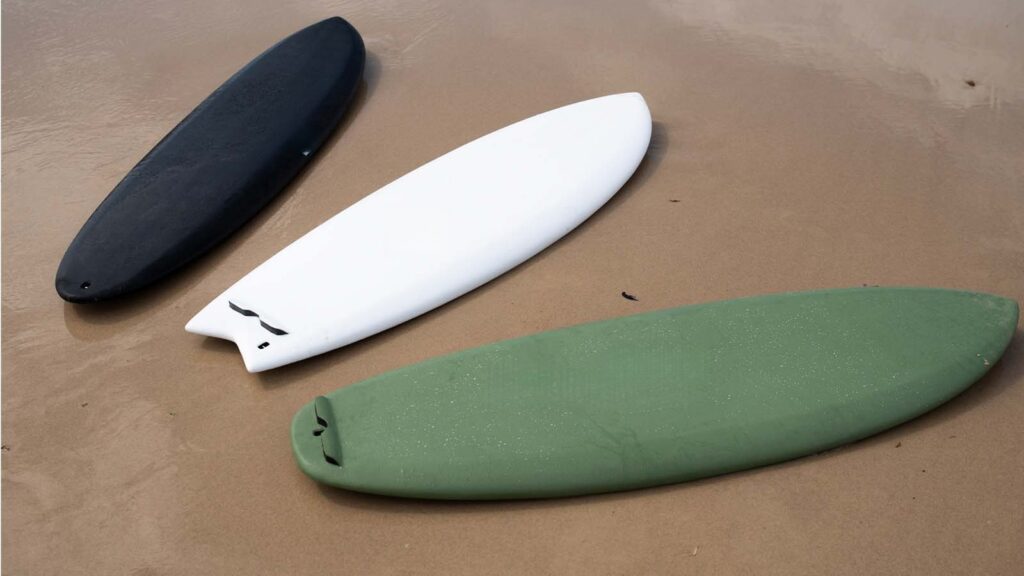
Surfing has evolved far beyond its traditional roots, and one of the most notable developments in recent years has been the rise of the soft surfboard, often called a softboard or foamie. Once seen only as beginner boards used in surf schools, softboards today represent a diverse and technically advanced category of surf equipment. They come in a wide range of designs, constructions, and performance levels—serving not only novices but also advanced surfers looking for fun, safety, and versatility in different wave conditions.
This article explores the modern classification of soft surfboards, explaining how they are categorized based on construction, shape, performance level, and intended user type.
1. Construction and Materials
Modern softboards can be classified first and foremost by their construction method and materials. While all softboards share the characteristic of having a soft, foam-covered deck, the internal structure and core technology vary widely.
1.1. Traditional EPS Core Softboards
The most common construction uses an EPS (Expanded Polystyrene) foam core, which is lightweight, buoyant, and relatively rigid. These boards typically include:
- EPS foam core: provides buoyancy and structural strength.
- Wooden stringers: inserted along the board’s centerline to add stiffness and durability.
- Soft IXPE or EVA deck: provides grip and comfort underfoot.
- HDPE slick bottom: a high-density polyethylene base that improves glide and durability.
This design is the foundation of most entry-level and intermediate softboards, combining softness and safety with reliable rigidity and performance.
1.2. Hybrid Softboards
A newer generation of boards features hybrid constructions, merging the best of soft and hard surfboards. They often use:
- Fiberglass or epoxy layers over the EPS core for added rigidity.
- Soft skin tops (EVA or IXPE) to retain safety and comfort.
- Reinforced stringer systems or carbon fiber rods for high-performance flex control.
Hybrid boards deliver a “hardboard feel” with the forgiving nature of a foamie. These are increasingly popular among experienced surfers who want the fun and style of a softboard without sacrificing speed or responsiveness.
1.3. Molded and Vacuum-Sealed Boards
Some modern softboards are molded or vacuum-sealed, resulting in a sealed, watertight, and more durable shell. These constructions reduce water absorption, increase longevity, and provide a cleaner finish. Brands like Catch Surf, Ocean & Earth, and Softech often use these technologies in their premium lines.
2. Shape-Based Classification
Just like traditional surfboards, softboards come in different shapes and outlines, each designed for specific surfing styles and conditions.
2.1. Soft Longboards
Soft longboards, usually 8 to 9 feet or longer, are designed for maximum stability and easy wave catching. They feature:
- Wide, rounded noses for smooth takeoffs.
- Flat rockers to maintain glide.
- Full rails for stability.
These are ideal for beginners or surfers who enjoy classic longboard-style riding, such as nose riding or cruising small waves. They are also popular in surf schools because they make learning easier and safer.
2.2. Soft Funboards / Mid-Lengths
Ranging from 6’6” to 8’0”, funboards (or mid-lengths) strike a balance between maneuverability and paddling ease. Their features include:
- Moderate volume and rocker.
- Rounded or squash tails for smoother turns.
- Easier control compared to longboards.
These are great for intermediate surfers who are transitioning from longboards to shorter boards, or for experienced riders who want a relaxed session on smaller waves.
2.3. Soft Shortboards
Soft shortboards (typically between 5’0” and 6’6”) mimic the shape of high-performance boards but with a soft exterior. They have:
- Sharper rockers and thinner rails.
- Multiple fin setups for varied performance.
- A lighter and more responsive feel.
They are designed for advanced surfers who want a fun, playful option for crowded or shallow surf spots. Modern soft shortboards can perform surprisingly well in small to medium surf, offering snappy turns and easy wave entry.
2.4. Soft Fish Boards
The fish shape has also become popular in softboard form. Fish softboards usually measure between 5’6” and 6’4”, featuring:
- A wider nose and tail.
- Twin-fin or quad-fin setups.
- Low rocker and high speed on small waves.
They are perfect for summer surf sessions, providing glide and flow even in weak waves. Their design appeals to surfers seeking fun and speed rather than radical performance.
2.5. Soft Mini Malibus
Somewhere between longboards and funboards, Mini Mals (7’0” to 8’0”) are extremely versatile. They maintain a friendly outline for easy paddling but are short enough to allow smoother turning. Many surf schools and rental centers use Mini Mals as their go-to boards because they suit a wide range of skill levels and body types.
3. Performance Level Classification
Softboards today cater to a wide range of performance expectations, from complete beginners to professional-level riders. They can be grouped into three broad categories:
3.1. Beginner Softboards
- Focused on stability, buoyancy, and safety.
- Often have large volumes (50–90+ liters).
- Equipped with flexible plastic fins.
- Wide, round noses and thick rails.
These boards are designed to make wave catching and standing up as easy as possible. They are the standard choice for surf schools and first-time riders.
3.2. Intermediate Softboards
- Combine manageable volume with improved turning ability.
- Use better-quality cores and stronger stringers.
- May have interchangeable fins or thruster setups.
- Often built with hybrid or molded constructions.
Intermediate boards are suitable for surfers who have mastered the basics and want to progress to carving turns and handling faster waves.
3.3. Performance Softboards
- Built for advanced or professional surfers.
- Incorporate high-performance outlines, thinner rails, and dynamic flex.
- Often use epoxy-fiberglass reinforcement under a soft deck.
- Compatible with FCS or Futures fin systems.
These boards are popular among competitive surfers looking for a fun, relaxed board for small-wave days, or anyone who wants to surf crowded spots with less risk of injury.
4. User-Based Classification
Different softboard models are also designed around target users, such as:
4.1. Surf Schools and Rentals
Boards in this category emphasize durability and safety. They often include:
- Heavier, reinforced constructions.
- Soft flexible fins or finless designs.
- Durable slick bottoms resistant to dings and scratches.
They’re ideal for repetitive daily use by multiple students and must endure constant impact and sun exposure.
4.2. Family and Recreational Users
These softboards focus on fun, comfort, and versatility. They’re suitable for beach vacations, casual surfers, and families with children. Lightweight construction, bright colors, and user-friendly design make them appealing for non-competitive environments.
4.3. Experienced Surfers
High-performance or hybrid softboards target seasoned surfers who already own traditional hardboards but want something different. These users appreciate softboards for crowded lineups, shore breaks, and playful sessions where safety and fun matter more than high performance.
5. Fin Systems and Tail Designs
Fin systems play a crucial role in how softboards perform. They can be classified as:
- Fixed soft fins – ideal for beginners, safe and flexible.
- Removable fins (FCS or Futures) – found on advanced and hybrid models.
- Twin, thruster, or quad setups – offering different levels of control and speed.
Meanwhile, tail shapes also contribute to performance distinctions:
- Squash tail – balanced control, found in many all-round models.
- Round tail – smoother turning and better flow.
- Fish tail (swallow) – enhances speed in small waves.
- Pin tail – adds hold in larger, steeper surf.
6. Brand and Market Trends
Modern softboard brands have diversified their product lines to meet these different categories. Leading companies such as Catch Surf, Softech, Ocean & Earth, Softlite, Mick Fanning Softboards, and Odysea have each developed unique design philosophies.
- Softech focuses on modularity and quality, with interchangeable fin systems and hybrid builds.
- Ocean & Earth and Softlite continue to serve the beginner and school market with durable, reliable models.
- Mick Fanning Softboards (MF Softboards) target advanced surfers with boards that feel like performance shortboards.
- Catch Surf pioneered the performance foamie revolution, blending retro designs with pro-level constructions.
This diversification shows how the softboard market has matured—no longer just a training tool, but a legitimate category within the surfboard industry.
7. Environmental and Safety Considerations
The modern softboard movement also reflects growing attention to sustainability and safety.
- Safety: Soft decks and flexible fins reduce the risk of injuries, making them ideal for crowded beaches and youth programs.
- Sustainability: Some manufacturers are exploring recycled EPS cores, eco-friendly resins, and biodegradable skins to reduce plastic waste.
As environmental awareness rises, these innovations are shaping the next generation of eco-conscious surfboards.
8. The Future of Softboards
The softboard industry continues to innovate rapidly. Expect to see:
- Improved flex dynamics that mimic fiberglass boards.
- Smart materials offering lighter and stronger constructions.
- Modular designs that allow easy fin, tail, or deck replacements.
- Greater focus on eco-friendly materials and recyclability.
With surf culture expanding globally, softboards are playing an essential role in making surfing accessible, safe, and fun for everyone—from kids and casual riders to seasoned pros.
Conclusion
Modern soft surfboards are no longer simple training tools. They represent a dynamic, evolving category that combines safety, technology, and fun. From lightweight beginner boards to advanced hybrid models, softboards now span the full range of surfing experiences. Their rise reflects a broader shift in surf culture—one that values inclusivity, innovation, and enjoyment over rigid traditions.
Whether you’re teaching a first-timer to stand up, gliding on a long, gentle wave, or carving small beach breaks with friends, the modern softboard has a shape and construction perfectly suited to your style. It’s more than just a board—it’s a statement of how surfing continues to evolve with creativity, accessibility, and pure stoke at its core