
1️⃣ Introduction
Modern hard SUPs are predominantly built with epoxy resin composites over EPS foam cores. Compared with surfboards, SUPs are wider and thicker, requiring more fiberglass and carefully planned layups to achieve stiffness without excess weight. Many factories rely on 3 mm EVA traction pads and simple colors, sometimes adding basic wood veneer finishes. But advanced OEM programs can go beyond — with water stickers for complex graphics, thicker multi-color EVA, and decorative fabrics like patterned or flax cloth that elevate the deck’s appearance.
2️⃣ Core & Geometry: Why SUPs Need More Material
Hard SUPs start with EPS foam shaped into larger planshapes (10’6” × 32” × 4.5”–6.0”). The extra width and thickness increase buoyancy but also bending stress, requiring more fiberglass weight per square meter and additional patches at high-stress zones such as the stance, handle, and fin box. Proper skin-to-core stiffness balance is crucial — too little glass causes flex and a soft feel; too much makes the board heavy and lifeless.
3️⃣ Standard Epoxy Layup: The Industry Baseline
A typical epoxy SUP layup includes: Deck — multiple layers of fiberglass, impact patches under stance areas, and reinforced inserts for handles and leash plugs. Bottom — continuous fiberglass skins with fin box reinforcement. Epoxy resin — chosen for strong adhesion to EPS and high fatigue resistance. Finish — hot-coat and sanding to achieve smoothness, durability, and target weight.
4️⃣ EVA Traction: From Standard 3 mm to Premium Comfort
Most factories default to 3 mm EVA for cost efficiency. It’s lightweight, slip-resistant, and easy to apply. Premium versions can upgrade to thicker EVA (4–6 mm) for comfort, use multi-color patterns for branding, and add embossed textures (diamond, brushed, rice-grain) for grip and drainage. These details enhance retail appeal and improve rider comfort.
5️⃣ Decorative Faces: Water Stickers, Patterned Cloth, Flax/Hemp
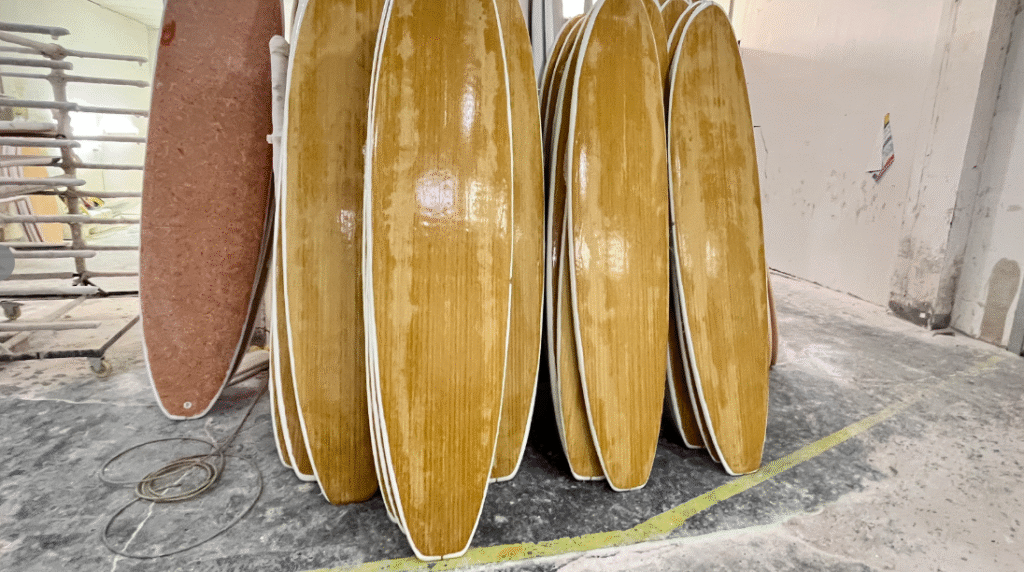
Beyond simple wood veneer looks, advanced decoration options include: Water stickers that enable full-board high-resolution artwork under the glass; Patterned fabrics for art-deck effects; and Flax or hemp cloth that add organic texture and eco-friendly appeal. These are placed inside the laminate, protecting artwork from scratches and UV, and sometimes slightly increasing stiffness depending on fabric choice.
6️⃣ Reinforcement Strategy: Where Durability Comes From
Durability depends on smart reinforcement in critical areas, not just more fiberglass. Stance zones need impact-resistant patches; handles and leash plugs require dense inserts and glass wraps; fin boxes need bridge layers to spread loads. This targeted approach keeps weight competitive while ensuring long service life.
7️⃣ Weight Management: Stiffness vs. Swing Weight
A premium SUP should feel light yet solid. This balance comes from selecting appropriate fiberglass weights, using high-solids epoxy with controlled resin content, maintaining even rail overlaps, and limiting thick EVA to essential areas. The result is lively handling with excellent strength-to-weight ratio.
8️⃣ Finish, Printing, and Color Systems
Entry-level boards rely on basic paint or single-color EVA. To upgrade, OEMs can use water stickers on the surface, two-tone or tri-tone EVA with CNC-cut logos, matte clear coats over flax fabrics, and UV-stable pigments with anti-yellowing protection. These enhancements create a premium visual identity while reducing after-sales issues.
9️⃣ OEM Playbook: From Standard to Signature
Build product tiers with modular combinations: Baseline — epoxy/EPS + standard fiberglass + 3 mm EVA; Comfort — thicker multi-color EVA + stance patches; Art — water stickers + patterned/flax fabrics; Durability — reinforced rails, fin-box bridges, and HD inserts. By mixing these modules for different channels (school, rental, touring, premium retail), brands can achieve clear price ladders and efficient production under one system.
�� Cost–Value Math: Where to Invest
High-value upgrades include: water-decal graphics for premium visuals, 4–6 mm EVA for comfort and traction, targeted reinforcements to reduce warranty returns, and flax accents for eco-friendly branding. These features create visible differentiation at retail and deliver tangible durability gains.
1️⃣1️⃣ Conclusion
Great SUP construction is a balance: epoxy and EPS for structure, strategic fiberglass for stiffness, smart reinforcement for durability, and aesthetic upgrades for identity. While many factories stop at 3 mm EVA and basic colors, adding thicker EVA, embedded artwork, and decorative fabrics transforms an ordinary board into a premium product — one that looks like a painting and performs like a dream.