
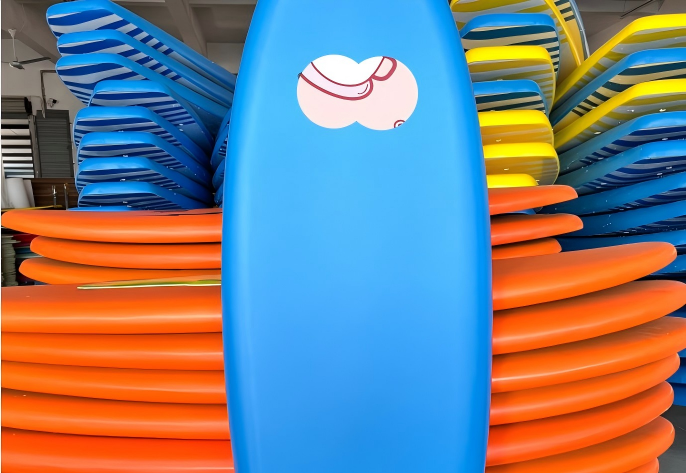
A Practical Guide for Surf Brands, Distributors, and Retail Buyers
Introduction: It’s Not About “Good Boards” — It’s About the Right Product Mix
If you’re a surf brand, distributor, or retail buyer, choosing the right softboard range is not about finding the “best board.”
It’s about building a product mix that matches how customers actually buy, use, and replace boards.
Soft top surfboards (softboards) have evolved into one of the most important retail categories in the surf industry. From beginner surfers to rental fleets and casual riders, demand continues to grow — but not all products perform equally in stores.
This guide breaks down:
- Which softboards actually sell in surf shops
- Why they sell
- How to structure a product line that moves inventory and generates repeat orders
1. Beginner Softboards (7’0”–8’0”): The Core Revenue Driver
Why They Sell
Beginner boards consistently represent the largest share of softboard sales.
In most markets, especially tourist and surf school regions, first-time surfers dominate demand.
These customers are not comparing performance specs — they are looking for:
- Stability
- Safety
- Ease of use
Key Features That Work in Retail
- Length: 7’0”–8’0”
- Wide outline for stability
- Thick rails
- High volume for easy paddling
- Soft deck and safe fin systems
Retail Insight
These boards are:
- High-volume sellers
- Frequently replaced
- Essential for surf schools and rental businesses
If this category underperforms, your entire softboard line will struggle.
2. Short Softboards (5’6”–6’6”): High-Margin “Fun Boards”
Why They Sell
This category targets casual surfers who want something fun, durable, and easy to ride.
These are often second boards or impulse purchases.
What Works
- Shorter length (5’6”–6’6”)
- Extra width and thickness
- Fish or hybrid outlines
- Strong visual design (colors, branding)
Retail Advantage
- Higher margins than beginner boards
- Strong appeal to younger customers
- Performs well in lifestyle-driven markets
These boards are not about performance — they are about experience.
3. Softboard Longboards (8’0”–9’0”): Rental & School Essentials
Why They Sell
Long softboards are critical for:
- Surf schools
- Rental operations
- Beginner-heavy regions
They provide:
- Maximum stability
- Easy wave catching
- Broad usability
What Matters Most
- Durable construction
- Reinforced core or stringer
- Strong bottom material (e.g. HDPE)
Key Insight
In this category:
Durability matters more than performance.
A longer lifespan directly increases ROI for rental businesses.
4. Kids Softboards (4’6”–6’0”): Underrated but Profitable
Why They Sell
Parents are highly motivated buyers, and safety is the top priority.
Key Features
- Lightweight construction
- Soft rails and deck
- Easy handling
- Bright, engaging graphics
Retail Benefits
- Fast turnover
- Repeat purchases (kids outgrow boards)
- Strong add-on sales (leash, accessories)
This category is often overlooked but consistently performs in the right markets.
5. Performance Softboards: Niche but Strategic
Market Reality
Performance softboards target experienced surfers, but:
- Demand is smaller
- Expectations are higher
- Competition with hardboards is strong
When They Work
- Hybrid shapes
- Reinforced construction
- Clear brand positioning
Role in Product Line
- Enhances brand image
- Expands offering
- Not a primary volume driver
6. What Actually Drives Softboard Sales
Beyond shape and size, real retail performance depends on:
Price Positioning
- Entry-level: high volume
- Mid-range: best balance (typically strongest sales)
- Premium: brand-driven
Durability
Retailers care about:
- Delamination
- Deck compression
- Water resistance
Low durability leads to returns and lost trust.
Visual Appeal
Especially important for:
- Short boards
- Kids boards
Design directly impacts sell-through rate.
Packaging & Presentation
Clean finish and professional presentation increase perceived value.
7. Recommended Product Mix for Retail Success
A balanced product line typically looks like:
- 40–50% Beginner softboards (7’0”–8’0”)
- 20–25% Long softboards (8’0”+)
- 15–20% Short softboards (5’6”–6’6”)
- 5–10% Kids softboards
- 5–10% Performance softboards
Why This Works
- Covers all major customer segments
- Balances volume and margin
- Reduces inventory risk
8. Common Mistakes Brands Make
Too Many Models
More options often lead to slower sales and higher inventory pressure.
Over-Focus on Performance
Most customers are beginners or casual surfers.
Ignoring Durability
Short product lifespan damages both brand and retailer relationships.
Copying Without Strategy
Successful products are not just copied — they are positioned correctly.
9. From Sample to Scale: Why Consistency Matters
Producing one good board is easy.
Producing thousands of identical boards is the real challenge.
Consistency directly impacts:
- Customer experience
- Retail confidence
- Repeat orders
This is where many brands face issues when scaling production.
10. Conclusion: Build for the Market, Not the Idea
The best-selling softboards are not defined by innovation alone.
They succeed because they align with:
- Real customer behavior
- Retail economics
- Durability requirements
The right product line sells. The wrong one sits in inventory.
Ready to Build or Optimize Your Softboard Line?
If you’re planning your next product range, focus on:
- The right category mix
- Construction decisions that reduce returns
- Scalable, consistent production
Talk to us about your next softboard project →
We can help you:
- Define your product line
- Optimize construction and cost
- Move from sample to reliable mass production