
Introduction
Epoxy softboards represent a new generation of surfboard construction that merges the strength and durability of epoxy resin with the safety, comfort, and versatility of soft-top surfboard design. For OEM buyers and surf brands, understanding this hybrid structure is essential for creating competitive products that balance performance, weight, cost, and visual appeal.
1️⃣ Structure of an Epoxy Softboard
A modern epoxy softboard typically consists of several integrated layers that work together to deliver durability, responsiveness, and comfort:
• EPS Core — lightweight foam providing buoyancy and shaping stability.
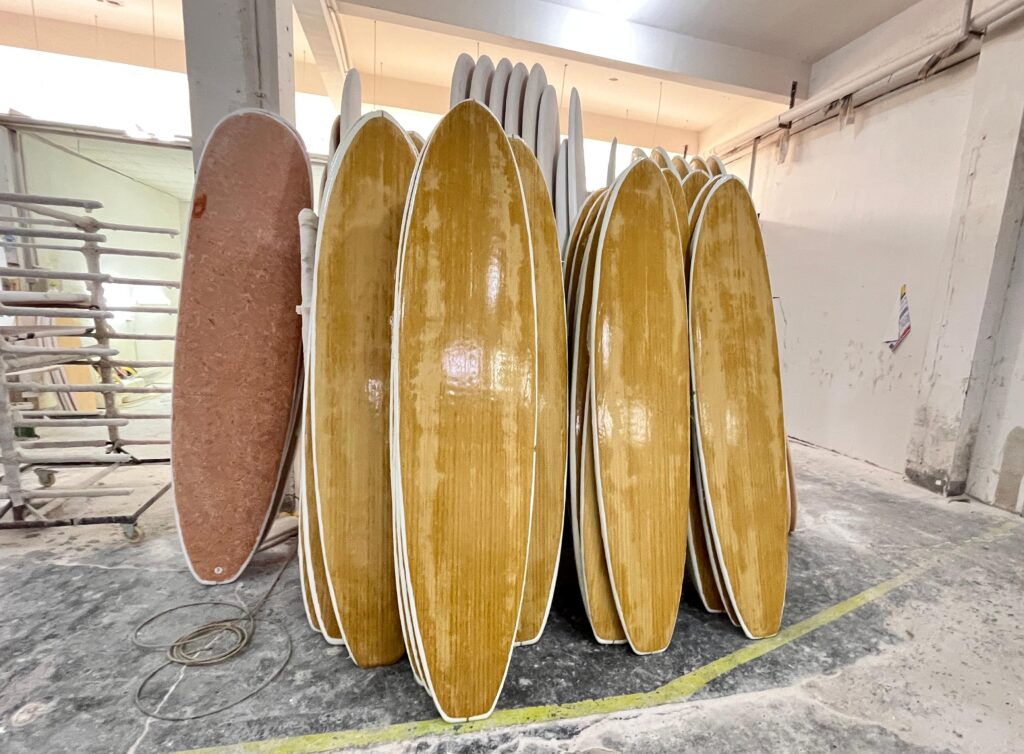
• Wood Veneer Layer — adds stiffness, flex control, and natural feel.(some have)
• Epoxy Resin Coating — reinforces and seals the structure against water and UV.
• Deck Material — IXPE or EVA foam, both can be embossed for texture and improved traction.
• EVA Deck (optional) — supports color-block combinations, enhancing appearance and brand distinction.
• HDPE Slick Bottom — provides smooth glide, durability, and impact resistance.
•Solid bottom— designed with a reinforced layer similar in strength and stiffness to that of standard epoxy surfboards.
2️⃣ How Epoxy Softboards Differ from Traditional Softboards
Traditional softboards usually rely on heat-laminated PE or IXPE decks bonded to EPS cores without additional resin reinforcement. While these boards are lightweight and affordable, they tend to lose rigidity and shape after extended use, especially in hot climates.
Epoxy softboards, on the other hand, use epoxy resin and wood veneer layers to achieve a semi-hard structure, bridging the gap between a softboard and an epoxy surfboard. This gives them greater responsiveness, durability, and longevity, making them ideal for surf schools and higher-end consumer markets.
3️⃣ Advantages of Epoxy Softboards
Epoxy softboards combine the rigidity of epoxy construction with the comfort of a soft-top finish. They are designed to deliver performance while maintaining safety for beginners and comfort for advanced riders.
• High Structural Strength — withstands impacts and pressure better than PE softboards.
• Enhanced Flex & Control — wood veneer adds natural rebound, ideal for maneuverability.
• Longer Lifespan — epoxy resin resists UV and deformation, reducing product returns.
• Custom Deck Options — IXPE/EVA decks can be embossed with texture or designed in color blocks.
• Professional Look — the finish appears more refined and solid than standard softboards.
• OEM Flexibility — suitable for both school rental programs and premium retail lines.
4️⃣ Potential Drawbacks
Despite its advantages, epoxy softboards come with a few considerations for OEM manufacturers:
• Higher Cost — epoxy resin and veneer layers increase raw material and labor costs.
• Slightly Heavier — added structural layers make it heavier than standard PE softboards.
• Longer Production Time — resin curing and lamination require more controlled conditions.
• Limited Flexibility in Repair — once damaged, epoxy surfaces are harder to fix compared to heat-laminated types.
5️⃣ OEM Considerations and Market Position
Epoxy softboards create strong differentiation for OEM partners. Brands can use material selection, deck customization, and finish design to align with their target audiences.
• Material Flexibility — IXPE provides smooth finish and comfort, while EVA delivers stronger traction and color options.
• Design Options — both IXPE and EVA can be embossed with custom textures and patterns.
• Color-block EVA — allows visually striking multi-tone decks, ideal for schools or youth brands.
• Branding — logos are typically applied via surface printing or some support water sticker transfer.
• Market Applications — popular in surf schools, club rentals, and premium consumer lines.
Conclusion
Epoxy softboards represent the future direction of soft surfboard manufacturing — blending safety, performance, and modern design. Their hybrid structure not only extends product lifespan but also enhances brand perception in competitive markets.
With options such as wood veneer reinforcement, epoxy sealing, and customizable IXPE or EVA decks, epoxy softboards can meet diverse OEM needs across markets and price tiers.
�� Contact us today to develop your OEM epoxy softboard line — designed for durability, aesthetics, and superior surf experience.